How to Choose the Right Land and Build in Las Terrenas, Dominican Republic
Buying land in Las Terrenas is the first step toward building your dream home or developing a profitable real estate investment. However, choosing the right plot requires more than finding a beautiful location. You need to consider your objectives, the property’s development potential, soil conditions, infrastructure, and the total cost of your project.
Whether you are planning to build a private villa, a rental property, or an apartment complex, the right land can make a significant difference to the success of your investment.
In this guide, we explain how to choose land in Las Terrenas and what to consider before starting your construction project.
1. Choose the Right Location for Your Real Estate Project
The first step when buying land in Las Terrenas is to define your objectives.
Are you looking for a place to live in the Caribbean? A second home for holidays? Or a property that will generate rental income?
Your objectives will influence the location, the type of land you need, and the property you should build.
Buying land to build your dream home
If you are planning to build a private residence, start by identifying the environment that best suits your lifestyle.
Las Terrenas offers a variety of neighborhoods, each with its own atmosphere and advantages.
- Playa Bonita: A beautiful beach area with a relaxed atmosphere, ideal for those looking for a peaceful lifestyle close to the ocean.
- Playa Cosón: Known for its long beach, tropical surroundings, and spacious properties. It is particularly attractive for buyers seeking privacy and a natural environment.
- Punta Popy: A convenient location close to the town center, restaurants, shops, and the beach.
- Las Ballenas: A popular residential area offering a pleasant beach, restaurants, and a mix of villas and condominium developments.
- The hills of Las Terrenas: An excellent option for those looking for ocean views, privacy, and a more secluded setting.
Think about your daily lifestyle. Do you want to walk to the beach? Be close to restaurants and shops? Or enjoy a quiet property surrounded by nature?
The location should reflect the way you intend to use your property.
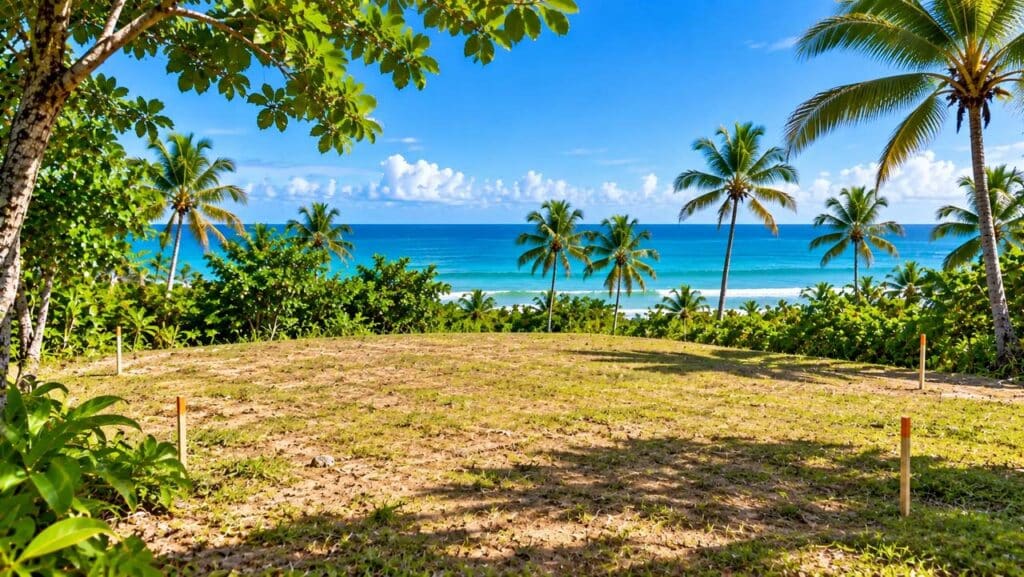
Buying land for a rental investment
If your objective is to generate rental income, location becomes an important part of your investment strategy.
Consider the following factors:
- Proximity to the beach and popular tourist areas.
- Easy access to restaurants, shops, and activities.
- The type of accommodation that vacation renters are looking for.
- Potential rental demand throughout the year.
- Competition from similar properties in the area.
A property close to the beach or town center may appeal to a wider range of vacation renters. However, a secluded villa with a private pool and attractive views can also perform well, depending on its positioning and target clientele.
The key is to choose a location that matches the type of property you intend to build and the clients you want to attract.
2. Make Sure the Land Matches Your Construction Project
Once you have identified your preferred location, the next step is to determine whether the land is suitable for your intended development.
Not every plot can accommodate every type of construction.
A parcel that is suitable for a private villa may not be appropriate for an apartment complex or a larger touristic development.
Define the size of the land you need
Start by establishing the type of project you want to develop.
For example:
- A private villa with a swimming pool and garden.
- A small residential condominium with several apartments.
- A collection of rental villas.
- A larger touristic project with multiple buildings and shared amenities.
The size of the land will depend on the project’s requirements, including the building footprint, parking, access roads, gardens, swimming pools, and other common areas.
It is important to consider not only the total land area but also how much of it can actually be developed.
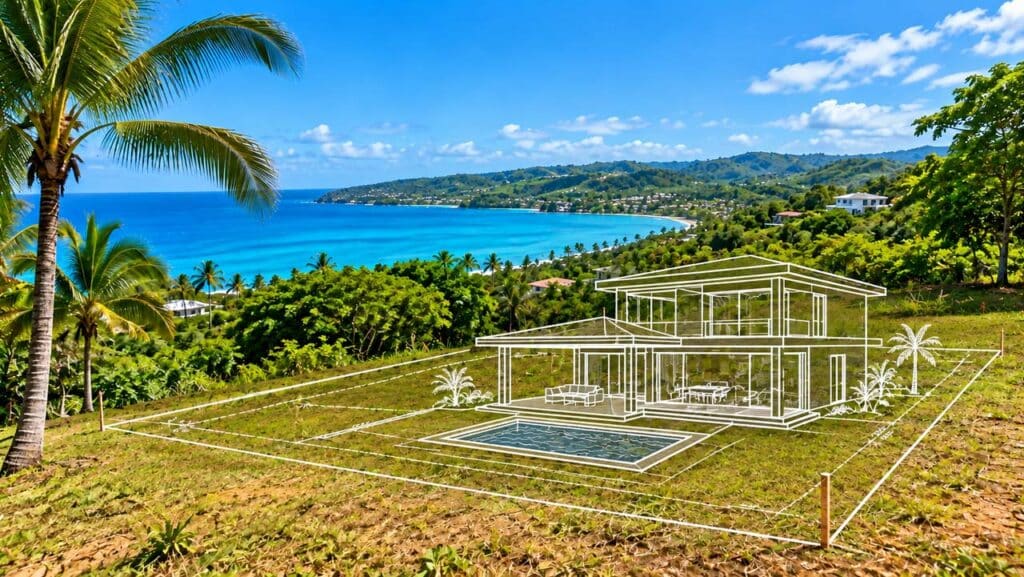
Understand building density and restrictions
Before purchasing land in Las Terrenas, verify the applicable urban planning regulations.
Depending on the location, these may include:
- Maximum building density or permitted construction area.
- Maximum building height and number of floors.
- Required setbacks from property boundaries.
- Restrictions on building coverage.
- Parking requirements.
- Environmental restrictions.
- Specific rules applicable to residential or touristic developments.
For example, a 2,000 m² plot does not necessarily allow you to construct 2,000 m² of buildings.
The permitted construction area may be significantly smaller, depending on the applicable regulations.
This is particularly important when purchasing land for an apartment complex or a larger investment project.
Always verify the development potential of the land before signing a purchase agreement. A preliminary architectural study can help determine whether your project is technically and legally feasible.
Consider your total construction budget
The purchase price of the land is only one part of the overall investment.
You also need to account for:
- Construction costs.
- Architectural and engineering fees.
- Legal and administrative expenses.
- Permits and authorizations.
- Land preparation and infrastructure.
- Landscaping and swimming pools.
- Furniture and equipment, particularly for rental properties.
- A contingency budget for unexpected expenses.
A less expensive plot may require significant additional investment before construction can begin.
The objective is to find land that allows you to complete your project within your total budget, rather than simply choosing the cheapest available option.
3. Check Road Access and Available Infrastructure
The physical condition of the land is another essential factor when buying property in Las Terrenas.
Plots can vary considerably in terms of terrain, drainage, accessibility, and existing infrastructure.
These characteristics can have a major impact on construction costs.
Road access
Make sure the land has reliable access to a public road or a legally established access route.
Consider:
- Is the access road paved or unpaved?
- Is it accessible throughout the year?
- Is it suitable for construction vehicles and equipment?
- Is the access legally established?
- Will the road require improvements or maintenance?
A plot with difficult access can increase transportation and construction costs, particularly during the building phase.
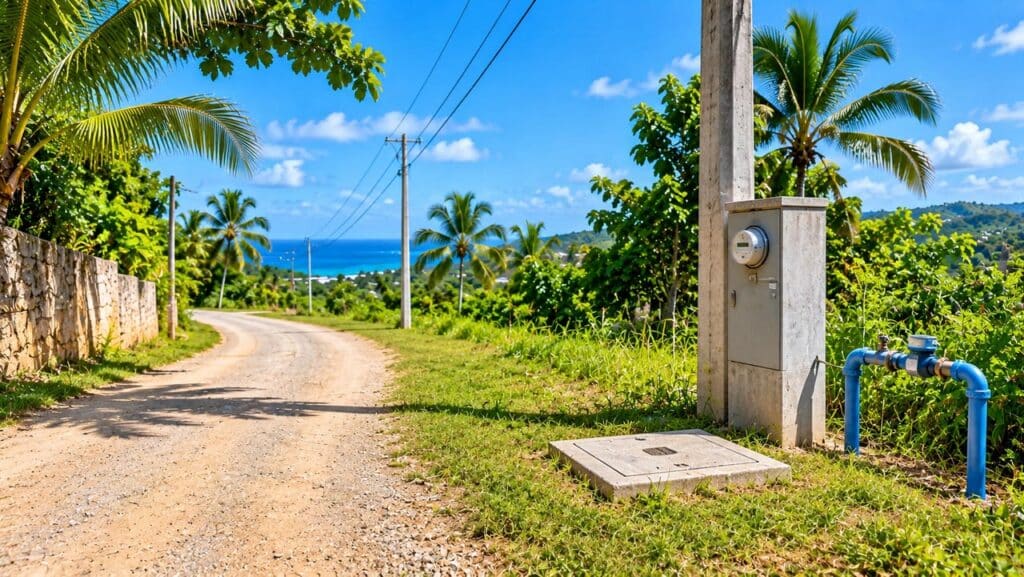
Electricity and water availability
Check whether essential utilities are available near the property.
Electricity: Determine how close the existing electrical network is and whether a connection can be obtained. If the property is located in a remote area, additional infrastructure or an alternative energy system may be necessary.
Water: Verify the availability of a reliable water source. Depending on the location, the property may be connected to a water network or require a well, water storage system, or other solution.
For larger developments, it is particularly important to confirm that the available infrastructure can support the project’s needs.
Also consider wastewater treatment, drainage, and internet connectivity.
These elements should be included in your preliminary budget.
4. Understand the Soil and Structure of the Land
One of the most important aspects of purchasing land in Las Terrenas is understanding its geological and hydrological characteristics.
The region has a tropical climate, with periods of heavy rainfall. Some areas contain marshy or waterlogged land, while others have steep slopes or rocky terrain.
These conditions can significantly influence the type of construction required.
Be careful with marshy land
Some plots in Las Terrenas may appear attractive because of their size, location, or price. However, land with a high water table or poor drainage can present important construction challenges.
Potential issues include:
- Water accumulation during heavy rainfall.
- Poor soil bearing capacity.
- Increased foundation costs.
- The need for drainage systems.
- The need for soil stabilization or ground improvement.
- Potential flooding or environmental restrictions.
Filling or raising the ground may sometimes be necessary, but this should never be considered a simple or automatic solution.
The feasibility of such work depends on the soil conditions, drainage, environmental regulations, and the intended construction.
Conduct a land study before building
Before purchasing land, we strongly recommend carrying out a preliminary technical assessment.
Depending on the property, this may include:
- Topographical survey: To understand the land’s elevation, boundaries, and slopes.
- Geotechnical soil study: To determine the soil composition and bearing capacity.
- Hydrological or drainage assessment: To identify water-related risks.
- Preliminary engineering assessment: To evaluate the necessary earthworks and foundations.
These studies help architects and engineers determine the appropriate construction methods and estimate the associated costs.
A land study is not simply an additional expense. It is an essential step in reducing uncertainty and protecting your investment.
5. Include Land Preparation Costs in Your Budget
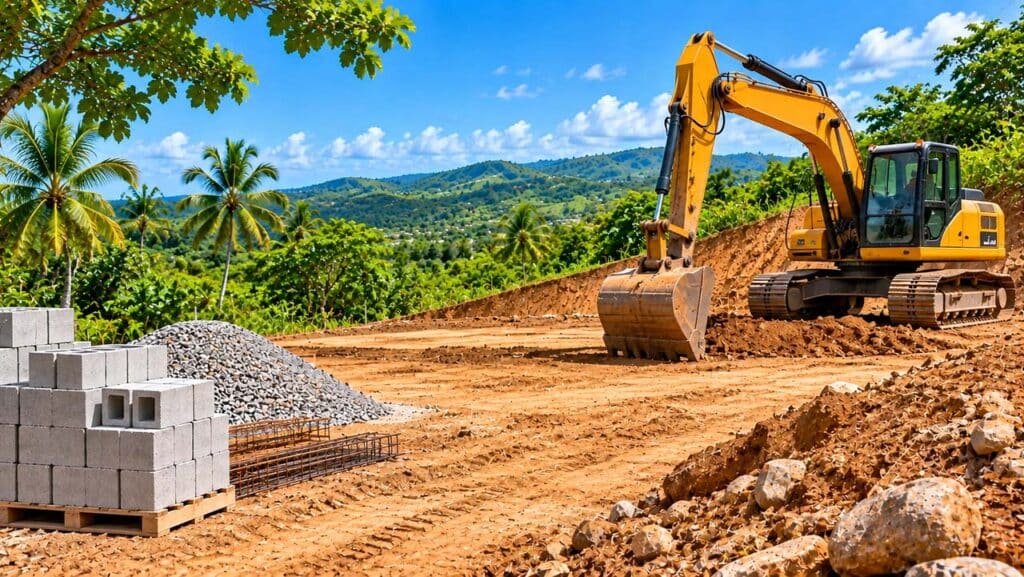
Once the land has been assessed, you can begin estimating the costs required to prepare it for construction.
Depending on the condition of the plot, land preparation may include:
- Clearing vegetation and removing unwanted trees.
- Excavation and earthworks.
- Ground leveling.
- Filling and compaction.
- Drainage systems.
- Retaining walls.
- Access roads and parking areas.
- Utility connections.
These costs can vary considerably from one property to another.
For example, a flat plot with good soil conditions and existing infrastructure may require relatively limited preparation.
In contrast, a marshy plot or a steep hillside property may require substantial additional work before construction can begin.
This is why it is important to evaluate land preparation costs before finalizing your purchase.
A proper assessment will help you establish a realistic overall budget and avoid unexpected expenses during construction.
6. Verify the Legal Status of the Land
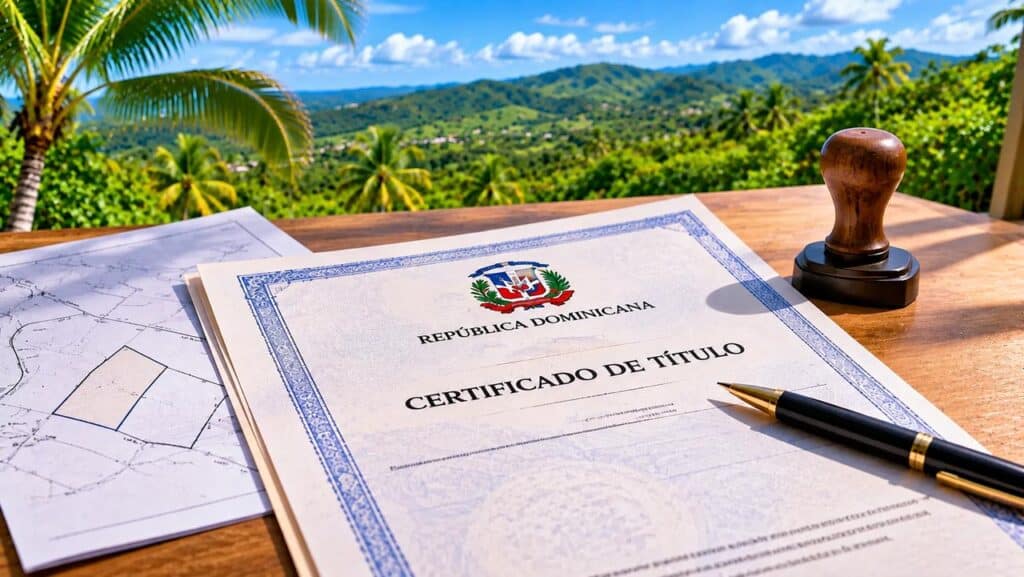
Before purchasing land in the Dominican Republic, it is essential to verify its legal status.
A property may appear suitable for construction, but its ownership documentation or legal situation may create complications.
We recommend working with an independent real estate lawyer who can verify:
- The ownership title (Certificado de Título).
- The cadastral survey and boundaries (Deslinde).
- The registered land area.
- Any mortgages, liens, or other encumbrances.
- The legal right of access.
- Applicable zoning and environmental restrictions.
- Whether the land can legally be transferred and developed.
For coastal properties, particular attention should be paid to environmental regulations and restrictions applicable to the maritime-terrestrial zone.
The legal verification process should be completed before committing to the purchase.
7. Work With the Right Professionals
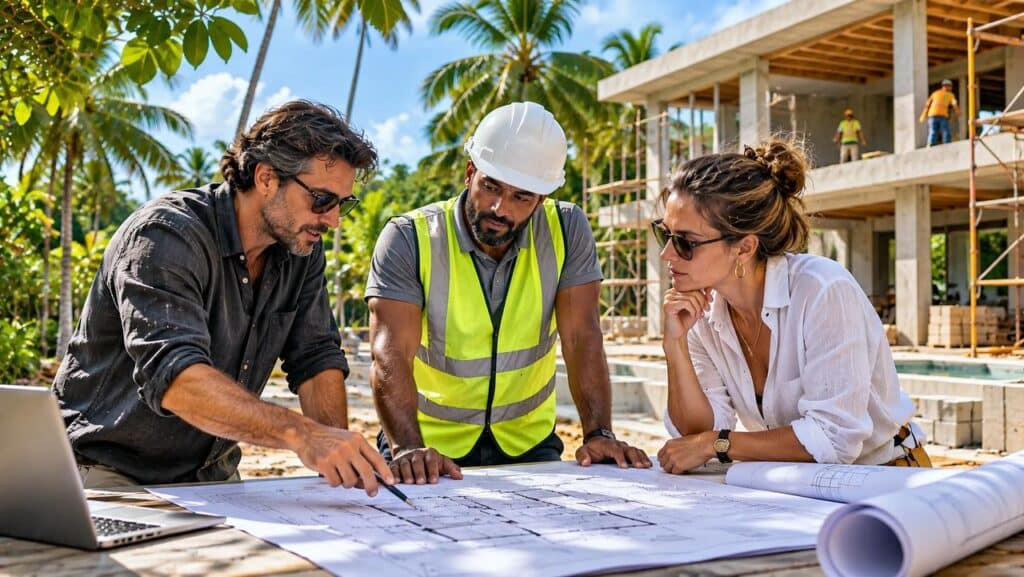
Building a property in Las Terrenas requires the collaboration of several professionals.
Depending on the size and complexity of your project, your team may include:
- A real estate agent familiar with the local market.
- An independent lawyer.
- An architect.
- A civil or structural engineer.
- A geotechnical specialist.
- A reliable construction company.
Each professional plays an important role in helping you make informed decisions.
An experienced local real estate agent can help identify suitable land, understand the characteristics of different neighborhoods, and coordinate the initial steps of your project.
An architect and engineer can assess the development potential of the land, while your lawyer ensures that the transaction is legally secure.
Working with the right team from the beginning can save you time, money, and unnecessary complications.
Conclusion: Find the Right Land for Your Project in Las Terrenas
Purchasing land in Las Terrenas is the first step toward creating your own Caribbean property.
Whether you are planning to build a private villa, a rental investment, or a larger real estate development, the success of your project begins with choosing the right plot.
The most important factors to consider are:
- Your personal objectives and investment strategy.
- The location and surrounding neighborhood.
- The size of the land and its development potential.
- The applicable building regulations.
- The condition of the soil and drainage.
- Road access and available utilities.
- The cost of land preparation.
- The legal status of the property.
- Your total construction and development budget.
Taking the time to evaluate these elements before purchasing land will help you make a more informed decision and build a property that meets your expectations.
At Ocean Edge Real Estate, we help buyers and investors identify suitable land opportunities in Las Terrenas and understand the potential of each property.
Whether you are looking for a beachfront plot, a hillside property with ocean views, or land for a residential or touristic development, our team can guide you through the initial stages of your project.
Contact us at Ocean Edge Real Estate to explore land opportunities in Las Terrenas and start planning your property project in the Caribbean!